Month Three, Gallery Closed: Why the Photos That Live on a Server Are the Ones We Forget
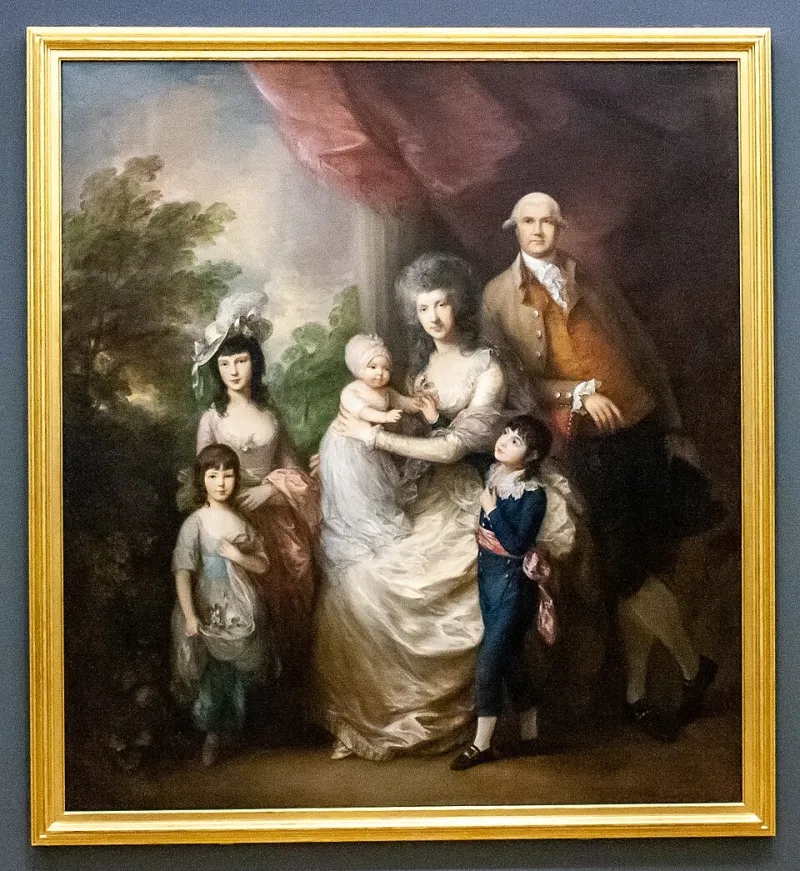
Photo: Thomas Gainsborough, Public domain, via Wikimedia Commons
I get a notification every time someone opens their gallery. It's not creepy — it's just part of the delivery platform — but it gives me a window into something I've started calling the gallery lifecycle. Clients open the link the day I send it. They open it again that weekend. They share it with their mom, their group chat, maybe their coworker who's getting married next fall. And then, somewhere around month three, the opens stop. The photos are still there, sitting in a cloud, technically theirs forever. They just stop existing in any real way.
I think that's a quiet tragedy, and I say that as someone who delivers digital galleries for a living. A photo on a server isn't a photo. It's a possibility of a photo. The whole point of what I do — the real moments, beautifully told part — falls apart if the telling never leaves the screen.
The Problem With 'I'll Print Them Later'
Everybody means to. I mean to floss, too. The problem is that a digital gallery requires a decision every single time you encounter it: open it or don't. A print requires one decision, ever. After that, it just works. It hangs on the wall and does its job every morning while you wait for the coffee to brew.
There's also a practical reality: hard drives fail, platforms shut down, logins get lost with old email addresses. I back everything up religiously, but I can't back up your access to it. The only truly future-proof storage is ink on paper.
The Gut-Pick Method for Choosing What to Print
Here's the system I give every client, and it works whether you're choosing from 60 images or 600.
First pass: open your gallery and pick the one image that stops you. Not the one you think you should pick — not the one with the best lighting or the one where everyone's looking at the camera. The one that makes your chest do something. Favorite it. Then close the laptop and walk away. Seriously. Go make dinner.
Come back the next day and look at that single image again. If it still hits, that's your print. This is the one that goes over the fireplace, large, framed properly. Everything else is a supporting cast member.
Second pass, a day or two later: pick five to eight more for a gallery wall or an album. The mistake people make here is choosing ten near-duplicates of the same expression. Mix it up — one wide shot that shows the whole scene, one close-up, one candid nobody knew I took. A wall of ten nearly identical smiling portraits looks like a studio package deal. A wall with variety looks like a life.
Where to Actually Print in the US
Please, I'm begging you: do not send a 300-image gallery to the one-hour photo counter and call it done. Big-box prints have their place for grandma's fridge, but for anything going on a wall, the lab matters. Cheap labs crush your blacks, shift skin tones toward orange, and print on paper that'll yellow in five years.
A few labs I trust and recommend to clients regularly:
- Miller's Professional Imaging and Bay Photo — both work with professional photographers and often let you order through us directly, which means I can quality-check the color before it ships
- MPix — the consumer-friendly arm of a pro lab, great middle ground for quality and price
- Artifact Uprising — beautiful softcover and layflat albums if you're going the book route
- Local frame shops — nearly every mid-size American town has one, and a custom framer will also tell you honestly if an image is too small for the wall you have in mind (they're usually right)
If you order through me, I color-manage the files against the lab's profiles, which is a fancy way of saying the greens in that landscape shot will look like the greens we actually stood in.
Ways to Live With Your Photos
A framed print over the fireplace is the classic, and it's a classic for a reason. But here are a few ideas I've seen work beautifully in real homes:
The hallway gallery. A hallway you walk through every day, with six to ten frames of mixed sizes, tells a story chronologically. Engagement, wedding, first house, the dog. Guests stop and look. You stop and look. It becomes the autobiography of your house.
The one-big-print rule. If budget's tight, skip the small stuff and print one image huge — 24x36 or bigger, in a simple black or natural wood frame. One oversized image has more presence than ten small ones ever will.
The annual album. This is my favorite suggestion for portrait clients. One book a year, twenty to forty pages. In twenty years, you'll have a shelf of them, and flipping through a physical album with your kids is a completely different experience than scrolling a camera roll.
The unexpected spots. I've seen a favorite landscape printed on a canvas above a client's entryway bench, a wedding detail shot turned into a small framed print in the bathroom (guests always notice), and a portrait series as a set of three above a bed.
Start With One
If you take nothing else from this: pick one image this week and print it. Not someday. This week. Thirty dollars, one frame, one wall. The rest can follow.
And if you're a past client staring at a gallery link you haven't opened since the spring — no judgment. Open it. Find your gut pick. Then let's get it out of the cloud and onto your wall, where it belongs.