Five 2026 Wedding Choices That Look Even Better in Photos
Midway through 2026, I've shot enough weddings to notice patterns—not just in color palettes or cake flavors, but in the choices that make a day easier to photograph. Some trends are pure decoration. Others change the entire rhythm of the coverage. Here are five showing up across this year's ceremonies that I'd happily steal for my own family, plus the ones that look better on a mood board than in a gallery.
The Short Guest List Is a Gift to the Camera
The 60-person wedding isn't a compromise anymore; it's a deliberate choice. Couples are trading ballroom capacity for dinner-party energy, and the camera benefits. Fewer guests means fewer distracted faces in the back row, fewer 'where do I stand?' moments during portraits, and more space for the candid stuff—the grandmother who pulls you into a hug, the best friend crying through your vows. When the room is small, people can't hide. That's usually where the best frames live.
What to steal: Build in ten extra minutes for group photos. A short guest list makes a full-group shot possible in under five minutes, but only if you actually schedule it.
Daylight Dance Floors Beat Dim Ballrooms
Afternoon receptions and lunchtime dance parties are having a moment. I've shot more 2 p.m. first dances this year than in the previous three combined. The upside is obvious: natural light, no flash fatigue, and guests who are still fresh enough to actually dance. The downside is that daylight is unforgiving—it exposes every crumpled linen and awkward shadow. But when it works, it's gorgeous. Couples are leaning into garden settings, open-air tents, and restaurants with big windows, and the photos feel like a party instead of a nightclub.
What to skip: Don't schedule your first dance directly under a skylight at high noon. Ask your photographer to scout the light before the guests arrive. A five-minute walk-through saves a hundred bad frames.
First Looks Are Evolving—and That's Good
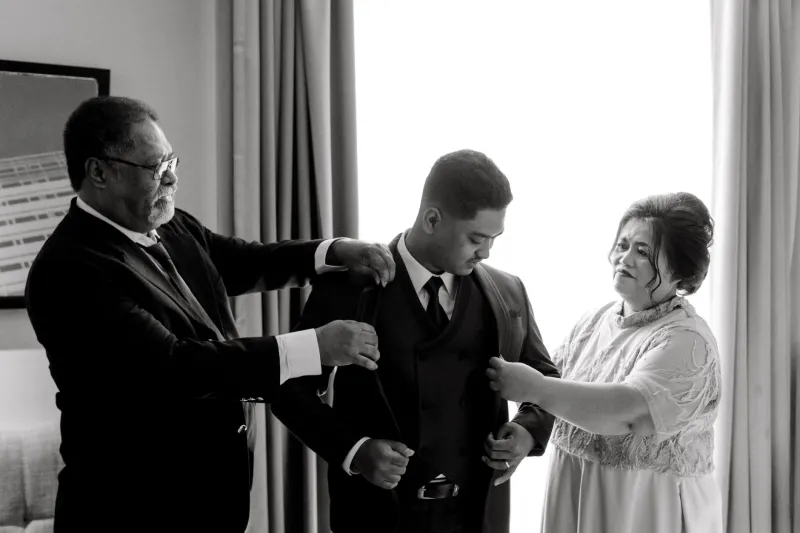
The traditional first look—bride tapping groom on the shoulder—still works. But this year I'm seeing more variations: first looks with a parent, a sibling, a grandparent, or the whole wedding party. Couples are also doing 'first touch' moments without seeing each other, or reading private vows through a door. These aren't gimmicks. They give the camera a genuine emotional beat before the ceremony, and they take pressure off the aisle.
What to steal: If you're on the fence about a first look, consider a 'quiet ten' instead. You and your partner stand on opposite sides of a wall or door and read your vows aloud. No audience. No performance. Just a moment. The photos are intimate without being staged.
The Unplugged Ceremony Keeps Eyes in the Room
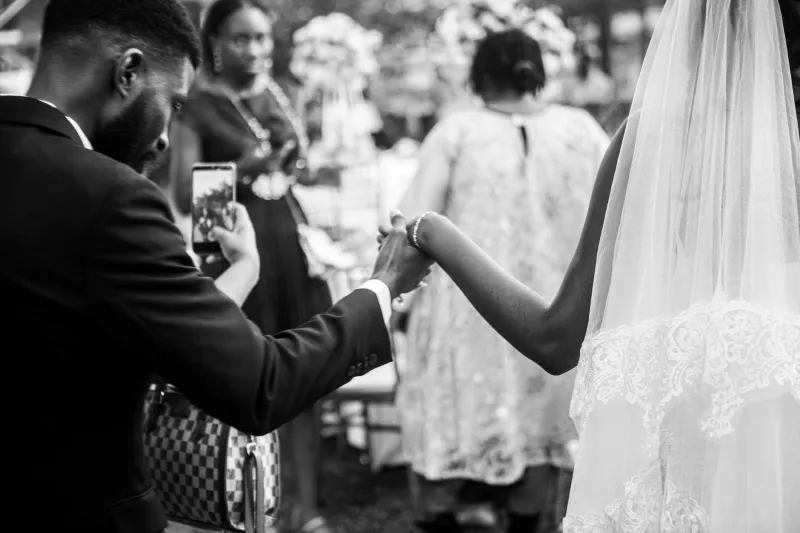
Phone-free ceremonies are no longer a fringe request. In 2026, they're standard at the weddings I shoot. And I get it: nobody wants a gallery full of guests holding up iPads. But the real win isn't the photos—it's the attention. When people aren't watching through a screen, they react. They cry. They laugh. They reach for each other. The camera catches all of it.
What to skip: The heavy-handed signage. A simple note in the program and a gentle announcement from your officiant is enough. You don't need a bouncer for the aisle.
Personal Vows, Private Moments, Better Photos
More couples are writing their own vows—and more are choosing to read them privately, before the ceremony, rather than in front of 150 people. That shift changes the photo story. Instead of one big public moment, you get a series of small, honest ones: shaky hands, folded paper, a laugh through tears. Those images tend to outlast the ceremony shots because they're not performed.
What to steal: If you're reading private vows, tell your photographer exactly where and when. Give us five minutes of warning. The best frame is usually the second before you start, not the moment after you finish.
What to Steal, What to Skip
The trends that photograph well aren't necessarily the ones that trend on social media. They're the ones that slow people down, shrink the room, or put better light on a real feeling. Smaller guest lists, daylight receptions, private vows, and unplugged ceremonies all do that. The trends that photograph poorly are the ones built for a phone camera—dark ballrooms with neon signs, choreographed entrances that take forty minutes to set up, and any moment where the couple is performing for an audience instead of living in it.
If you're planning a 2026 wedding, steal the quiet stuff. Skip the spectacle. Your gallery will thank you.