Grandma's Disposable Camera Beats My $4,000 Setup (Sometimes)
There's a moment at almost every wedding I shoot. I'm crouched low during the first dance, framing the shot, and I feel it — the gentle press of a phone screen hovering just over my left shoulder. Somebody's filming over my arm. Somebody else is stepping into my frame for a vertical video that will live in their camera roll for exactly eleven seconds.
I get it. I really do. Everyone loves these two people, and the instinct to capture the moment is a good one. But here's the thing nobody wants to say out loud at a reception: guest photos shot over the photographer's shoulder are almost never the ones that matter. They're duplicates. Slightly blurrier duplicates of what I'm being paid to deliver.
So over the years I've developed a gentle, mostly unspoken system. And it has exactly one exception — an exception I now encourage every couple to build into their day on purpose.
The One Camera I'll Never Compete With
A few summers back, I shot a wedding outside Asheville where the groom's grandmother, Ruth, spent the entire evening with a disposable camera she'd brought herself. Flash popping every few minutes. No screen to review. No second takes.
When the couple got the prints developed weeks later, there it was: a slightly crooked, harshly flashed, gloriously imperfect photo of the bride laughing so hard she's gripping the back of a chair — taken from Ruth's seat at table six, a vantage point I never had. The bride told me later that photo beat everything in her professional gallery, and she had to explain to her mother why she'd framed it for the hallway.
It's not that the photo was technically better. It wasn't. It's that the photo was hers. It came from a person, a seat, a relationship. Nobody will ever frame a screenshot from my shoulder-height coverage of table six, but Ruth's view of the room? That's family history.
Why the Blurry Ones Win
Here's my honest take as the person with the expensive camera: my job is to give you the polished record of the day. The gallery you'll pull from for the album, the print for above the fireplace, the image for the holiday card. That coverage matters, and it's worth protecting from a dozen phones bobbing in the background of every frame.
But a wedding isn't one story. It's a hundred small ones happening at once — and I can only stand in one place. The disposable camera tradition works because it captures the story I can't: what the day looked like from the seats, from the dance floor, from the perspective of the people who love you and don't know an f-stop from a frittata.
There's also the delay factor, and I think it's secretly the best part. Disposable cameras can't be reviewed, filtered, or posted. They disappear into a drop box and come back as prints weeks later — long after the wedding high has faded, when a little envelope of surprises lands in your mailbox. In an era where everything is instant and nothing is savored, that wait feels like a gift.
How to Build the Tradition Without the Chaos
If you want to do this well — and not end up with 400 exposures of the cake — here's what I've seen work:
Assign, don't scatter. Instead of leaving disposable cameras on every table (a trend that mostly produces photos of strangers' elbows), hand one to two or three specific people. A grandmother, a favorite aunt, the flower girl's chaperone. You're not collecting crowd coverage; you're collecting points of view.
Give them a mission. "Get the stuff I won't see" works wonders. The guests dancing while we're off doing sunset portraits. The kids under the head table. The bar scene. People rise to a creative assignment.
Cover the developing costs. Tuck a note in with the camera: "We'll develop this — just shoot and hand it back at the end." Most drugstore photo counters and mail-in labs still process color 35mm for a reasonable price, and it's the cheapest wedding line item you'll never regret.
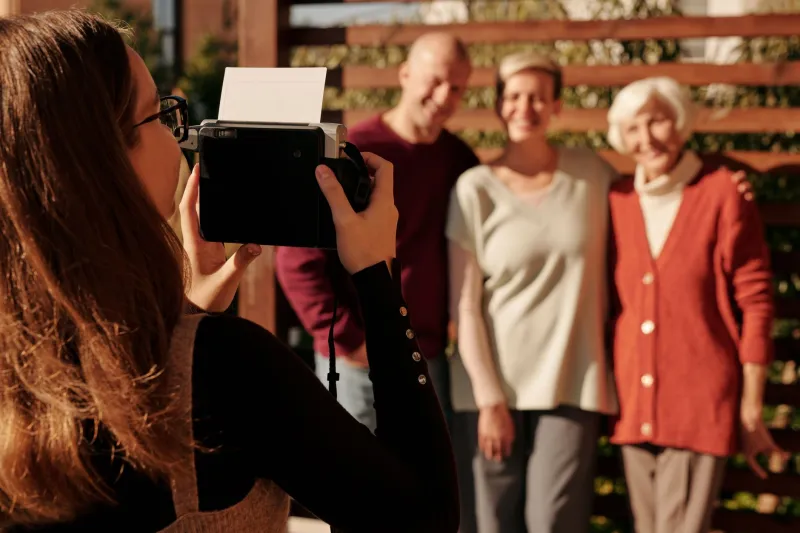
Tell your photographer. Seriously — tell me. If I know Ruth has a disposable, I'll make sure she gets great moments to point at. I'll light her shots mentally, keep her out of my backgrounds when it matters, and honestly, I'll probably grab a photo of her taking photos. That one always ends up in the album too.
A Note to the Phone Filers
I'll close with this: the instinct to shoot over my shoulder comes from love, and I'd never want to squash it. But here's a reframe that's worked at every wedding where I've said it out loud — the couple has hired me so that you can be fully present. Put the phone down, and the photos I take will have your actual face in them, laughing, mid-celebration, instead of your forehead and a camera strap.
And if you absolutely must have a camera in your hands? Ask the couple if you can be one of the disposable camera people. Take crooked, over-flashed, beautifully uncurated pictures. Those are the ones that end up on refrigerators, in shoeboxes passed around at Thanksgiving, and — if Ruth has anything to say about it — framed in the hallway for the next thirty years.
The $4,000 setup gets the gallery. Grandma gets the heirloom. Everybody wins.