Wait for the Light: What One Ordinary Meadow Taught Me About Wedding Photography
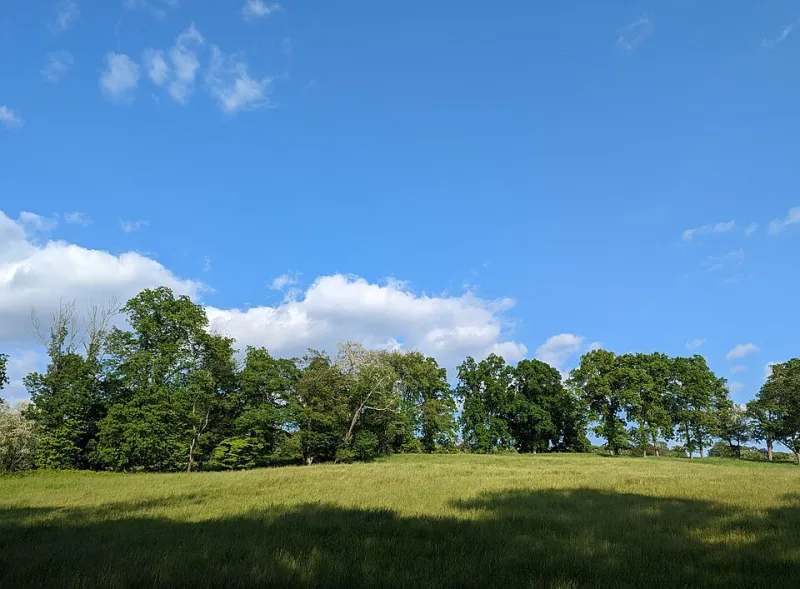
Photo: Simon Geisker, CC BY 3.0, via Wikimedia Commons
Most landscape photographers have a spot they return to. Mine is a scruffy meadow behind a friend's barn, maybe forty acres of grass, a crooked fence line, and one oak tree that has seen better decades. I started photographing it every couple of weeks this past year, mostly as a personal project. No client, no deadline, no shot list. Just one field and whatever the sky decided to do.
What I did not expect was how much it would change the way I shoot weddings. Standing in the same place through winter, spring, summer, and fall teaches you things a mood board cannot. You learn to wait. You learn that bad weather is not the same as bad light. You learn that the first frame you see is usually the one everyone else sees too.
The project was an excuse to slow down
I picked the meadow because it was ordinary. No mountain, no ocean, no famous overlook. Just grass, fence, tree, sky. That ordinariness turned out to be the point. When a location does not hand you a postcard, you have to look harder. You notice how the fence casts a shadow at four o'clock. You notice which corner holds fog the longest. You notice the way the oak tree changes from black to silver depending on the cloud cover.
That is exactly the skill a wedding day asks for. Most couples do not get married in a postcard. They get married in a church basement, a barn, a backyard, a hotel ballroom, or a park pavilion with a parking lot behind it. The job is not to find the perfect backdrop. The job is to find the frame inside the place you actually have.
Winter taught me to see small
The first few visits were bleak. Gray sky, brown grass, wind that made my eyes water. I kept waiting for a dramatic sunset that never came. Eventually I stopped looking at the horizon and started looking down. Frost on a single blade of grass. A fence post wearing a cap of snow. The oak tree reduced to a clean black line against white sky.
Winter is a good teacher for wedding photographers because it strips away the easy stuff. No flowers, no golden hour, no lush background. You have to work with shape, contrast, and gesture. At a wedding, the same thing happens during a rainy reception or a winter ceremony. The light is flat, the schedule is tight, and the room is beige. You can complain about it, or you can find the small frame: a grandmother's hands, a groom's face during a toast, the reflection in a window.
Spring taught me to stay put
One April evening I almost packed up. The light was boring, the sky was empty, and I had convinced myself there was nothing there. I sat in the car for five minutes, then walked back out. Ten minutes later the sun dropped under the cloud bank and turned the whole field gold. The oak tree went black. The grass lit up. I made the frame I had been chasing for weeks.
That is the lesson I repeat to couples now: the best light often arrives after you are ready to quit. Wedding timelines are built around ceremony and reception, but the real magic frequently happens in the ten minutes when everyone thinks the photos are over. The exit, the last dance, the quiet walk to the car. If your photographer is willing to stay a little longer and you are willing to build in a buffer, you get those frames.
Summer taught me that weather is not the enemy
Summer in the meadow was harsh. Noon light was brutal. The field looked flat and hot. I started shooting into the sun, under the oak, close to the grass, anywhere the light did something interesting instead of just sitting on top of everything.
Then a storm rolled in. I stayed. The sky turned purple, the wind bent the grass, and the light went electric. Those are still some of my favorite images from the whole project. Not because the weather was good, but because I stopped treating it as a failure.
Couples hear this from me a lot: a rainy wedding is not a ruined wedding. It is a different wedding. The photos are different, too. Umbrellas, wet pavement, window light, close groups under a porch. Some of the most honest images I have made happened because Plan A got rained out and Plan B got real.
Fall taught me to move my feet
By October I thought I knew the meadow. Then I walked twenty steps to the left and found a completely different composition. The fence lined up with the tree. The grass caught the low sun. The background dropped away. I had been standing in the same spot for months because it was comfortable.
Wedding days are full of comfortable spots. The same portrait location, the same family lineup, the same exit shot. Those are fine, but they are not the whole story. The best frames often come when you wander a little. A hallway, a stairwell, a patch of shade behind the tent. A couple who is willing to take a five-minute walk away from the crowd usually gets something that feels like them instead of something that feels like a template.
What this means when you pick a venue
When couples ask me what to look for in a venue, I used to talk about architecture and scenery. Now I talk about light and options. Ask where the ceremony will stand at your ceremony time. Ask what happens if it rains. Ask whether there is indoor space with windows. Ask if you can walk to a second location without losing half an hour. Ask what the place looks like at six in the evening, not just at noon during your tour.
A venue is not a backdrop. It is a landscape. It has weather, light, seasons, and moods. The more you know about how it behaves, the better your photos will be.
The obvious shot is rarely the only shot
By November 2026 I had a full year of the meadow in my portfolio, and I still do not think I have made the definitive image of it. That is fine. The project taught me that the obvious shot is usually just the first shot. The wedding version of that is the posed portrait in front of the scenic view. It is nice. You will probably frame it. But it is not the only frame, and it is rarely the one that makes you cry.
The ones that last are the ones that happen when you stop chasing the postcard and start paying attention to what is actually in front of you. A field is never just a field. A wedding day is never just a schedule. Both reward the person who waits for the light.